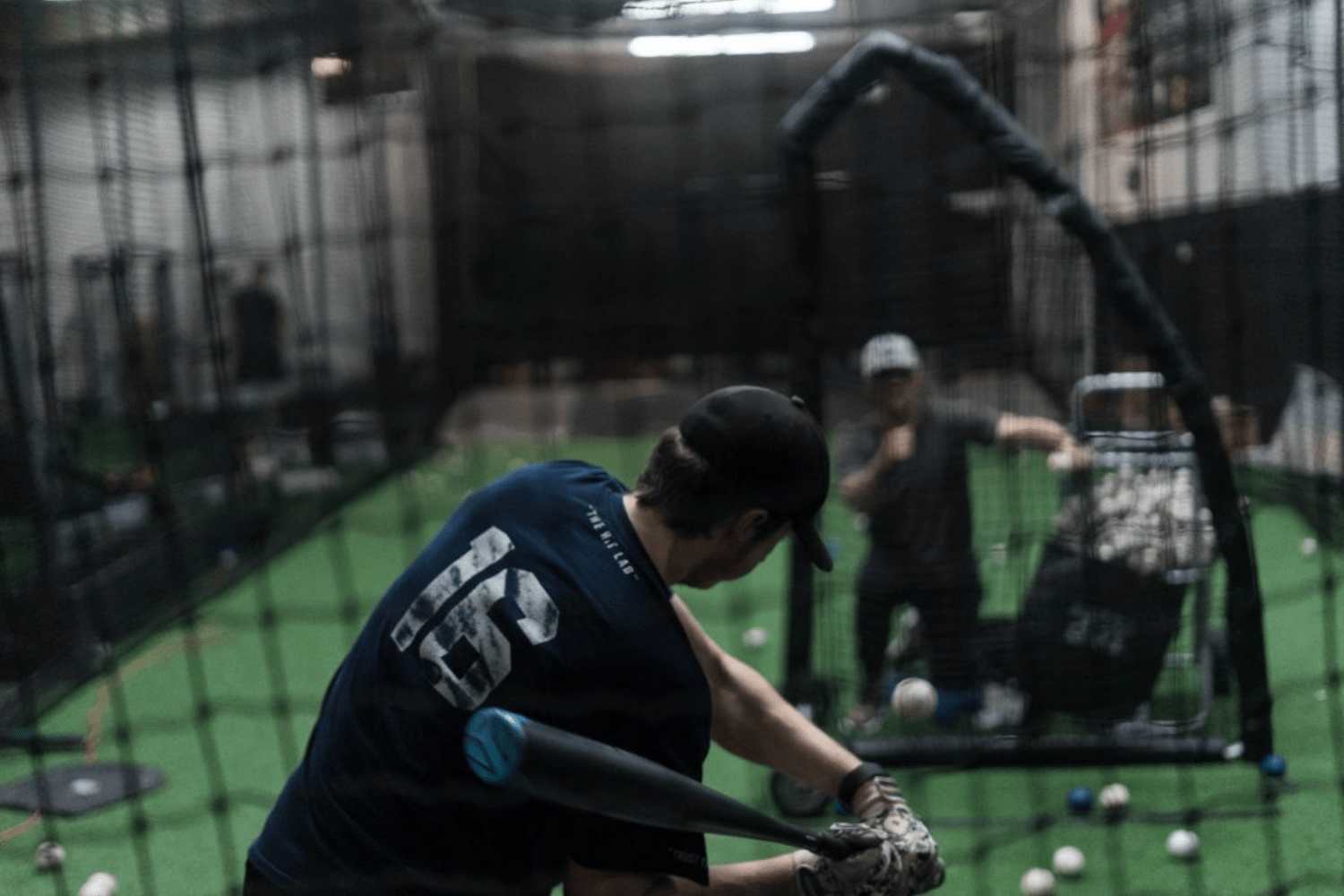
Few coaching cues in baseball and softball have stirred more debate than “squish the bug.” What started as a well‑intentioned teaching tool has become one of the most contested topics in modern hitting instruction.
The short version: the cue often teaches the effect of a good swing, not the driver of it — and it can sabotage sequencing, weight transfer, and bat speed.
What does “squish the bug” mean?
“Squish the bug” (or “squash the bug”) tells hitters to pivot on the back foot during the swing, as if crushing an imaginary bug under the back toe.
The intent is good. Coaches want athletes to feel hip rotation — and the hips absolutely matter. The issue is that many hitters interpret the cue as spinning in place.
Where did the cue come from?
The cue grew from a real truth: the hips must lead the swing. Coaches saw elite hitters rotate and noticed the back foot turning.
But here’s the disconnect:
- The back foot turning is often a byproduct of powerful rotation and weight transfer.
- When it becomes a conscious trigger, it tends to flip the sequence.
The case against “squish the bug”
Modern biomechanics and high-speed video analysis have largely dismantled this cue. Here’s why it can do more harm than good:
- It breaks the kinetic chain. If the athlete initiates by twisting the back ankle, the back knee and hips follow in the wrong order. Energy stalls instead of moving cleanly from ground → legs → hips → torso → barrel.
- It creates a rotational (not directional) energy path. Instead of transferring force through the baseball, hitters often rotate around it and pull off.
- It can kill bat speed. Tech studies and practical testing consistently show better bat speed and contact quality when the back heel rises and moves naturally as the hips fire — not when the hitter tries to spin on the toe.
- It traps weight on the back side. Spinning in place commonly prevents forward weight transfer, which costs both power and adjustability.
- It tends to produce more ground balls. When the barrel works in and out of the zone instead of through it, hitters roll over and get on top of the ball.
What elite hitters actually do
In high-level swings, you typically see:
- The back heel rising naturally.
- The back foot moving forward (or “replacing”) as the pelvis rotates.
- The back side being pulled through by hip rotation, not pushing the swing into rotation.
In other words: the foot is responding to the engine. It is not the engine.
The mechanics that actually work (a better sequence)
If you want a cue that matches how great swings are built, teach the sequence — not the spin.
- Load and gather
- Create momentum and athletic tension.
- Stride and front foot strike
- Land stable and on time.
- Front heel drives into the ground
- This is a powerful trigger that helps the hips rotate aggressively.
- Back side fires naturally
- The back knee works forward/in, the heel releases, and the back foot follows.
- Knees pinch at contact
- You finish connected, balanced, and through the ball.
Why is it still being taught?
Even with overwhelming evidence against it, the cue hangs around because:
- It’s simple.
- It’s memorable.
- It does create some rotation (even if it is inefficient).
- For very young athletes, it can look like progress compared to an all‑arms swing.
A fair compromise: if a beginner needs a starting point to feel rotation, use it briefly — then replace it as soon as they can understand a better movement pattern.
Bottom line for coaches
“Squish the bug” was born from the right instinct — getting hitters to use their lower half — but it often teaches the wrong move.
Better coaching cues:
- “Drive the front heel into the ground — then let the hips go.”
- “Rip the back hip through toward the pitcher.”
- “Rotate against a firm front side.”
If you’re still using “squish the bug,” it might be time to retire it — and build swings around sequencing, force transfer, and adjustability instead.